

Self Stretch GuideA little room to move.
Simple, illustrated stretches for the main areas of your body. Choose a comfortable movement, take your time, and build a routine that fits your day.
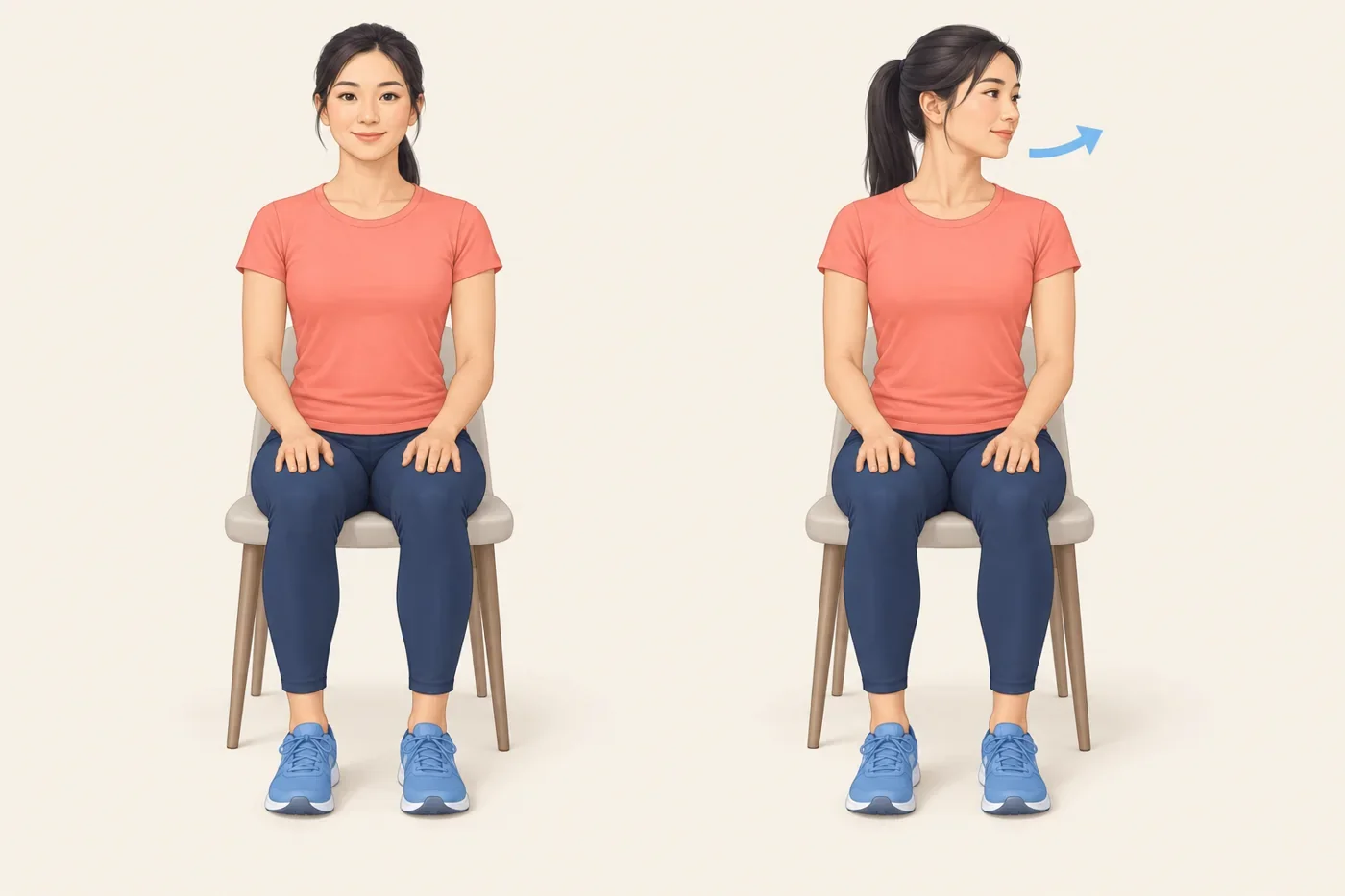
Start → stretch gently Tap image to enlarge ↗
Gentle neck rotation
- Sit tall on a stable chair, with your shoulders relaxed.
- Turn your head slowly to one side, only as far as comfortable.
- Pause, face forwards, then repeat on the other side.
Keep your shoulders facing forwards. Never force the turn.
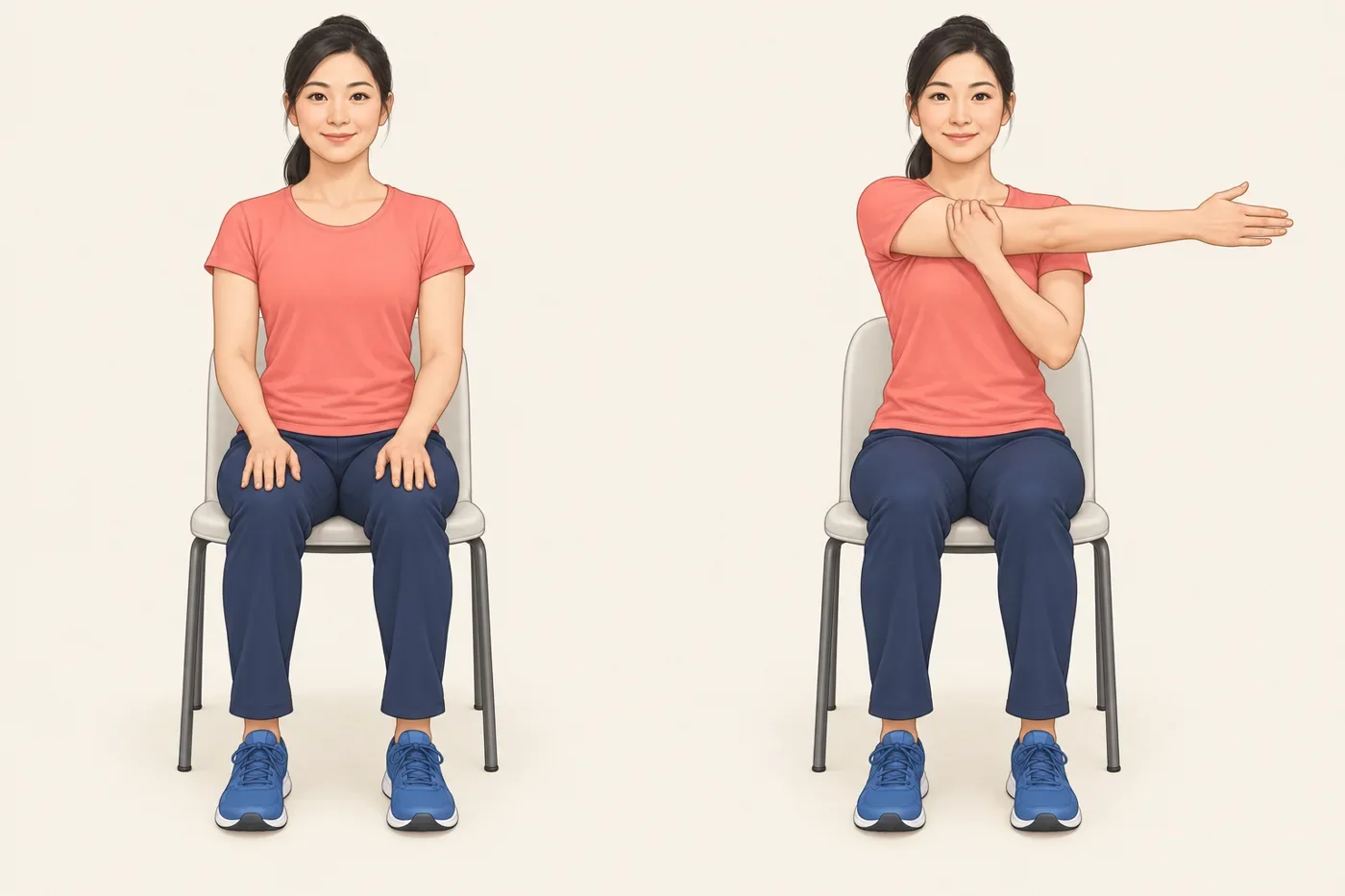
Start → stretch gently Tap image to enlarge ↗
Across-chest stretch
- Bring one arm across your chest at shoulder height or a little lower.
- Support the upper arm with your opposite hand, above the elbow.
- Ease it towards you while keeping your torso facing forwards.
A gentle stretch behind the shoulder, not pain in the joint.
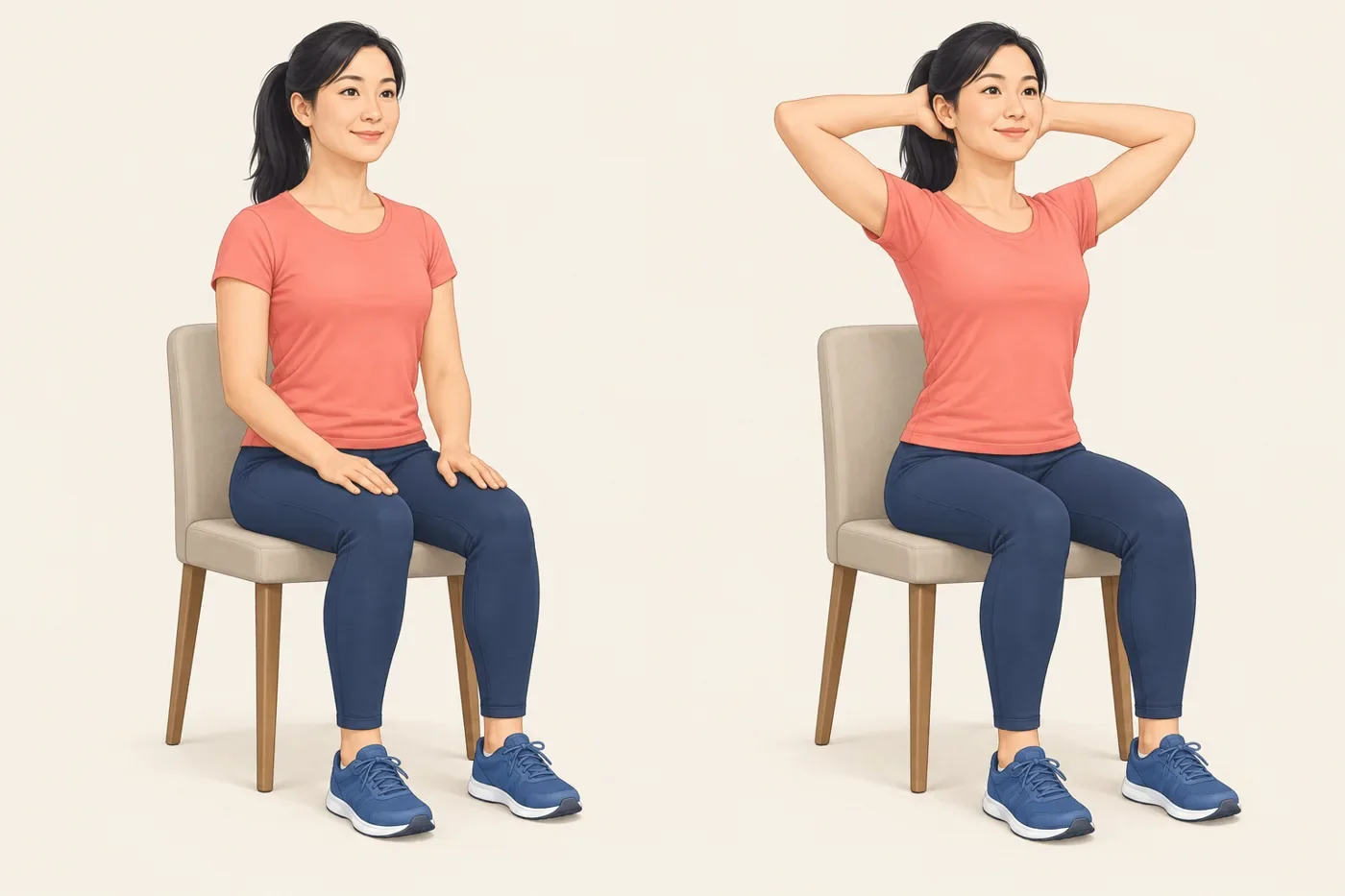
Start → stretch gently Tap image to enlarge ↗
Seated chest opening
- Sit tall. Rest your hands lightly behind your head.
- Let your elbows open out, gently bringing your shoulder blades closer.
- Keep your ribs relaxed and breathe normally.
Do not push your head forwards or arch your lower back.
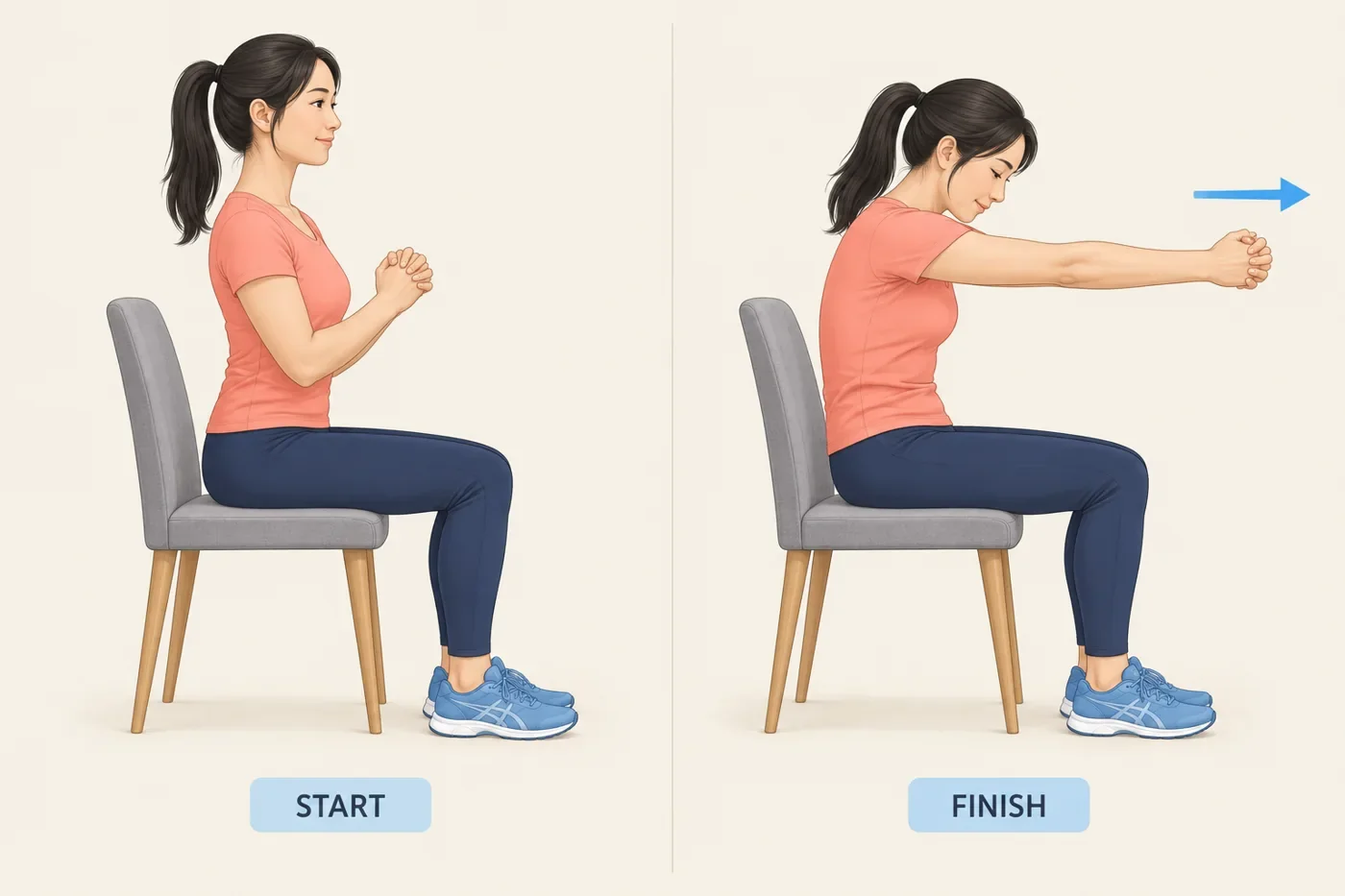
Start → stretch gently Tap image to enlarge ↗
Seated forward reach
- Sit on a stable chair with both feet on the floor.
- Reach your arms forwards and loosely clasp your hands.
- Breathe out as you reach a little further and gently round your upper back; breathe in as you release.
Keep shoulders away from your ears. Use a small, comfortable movement.
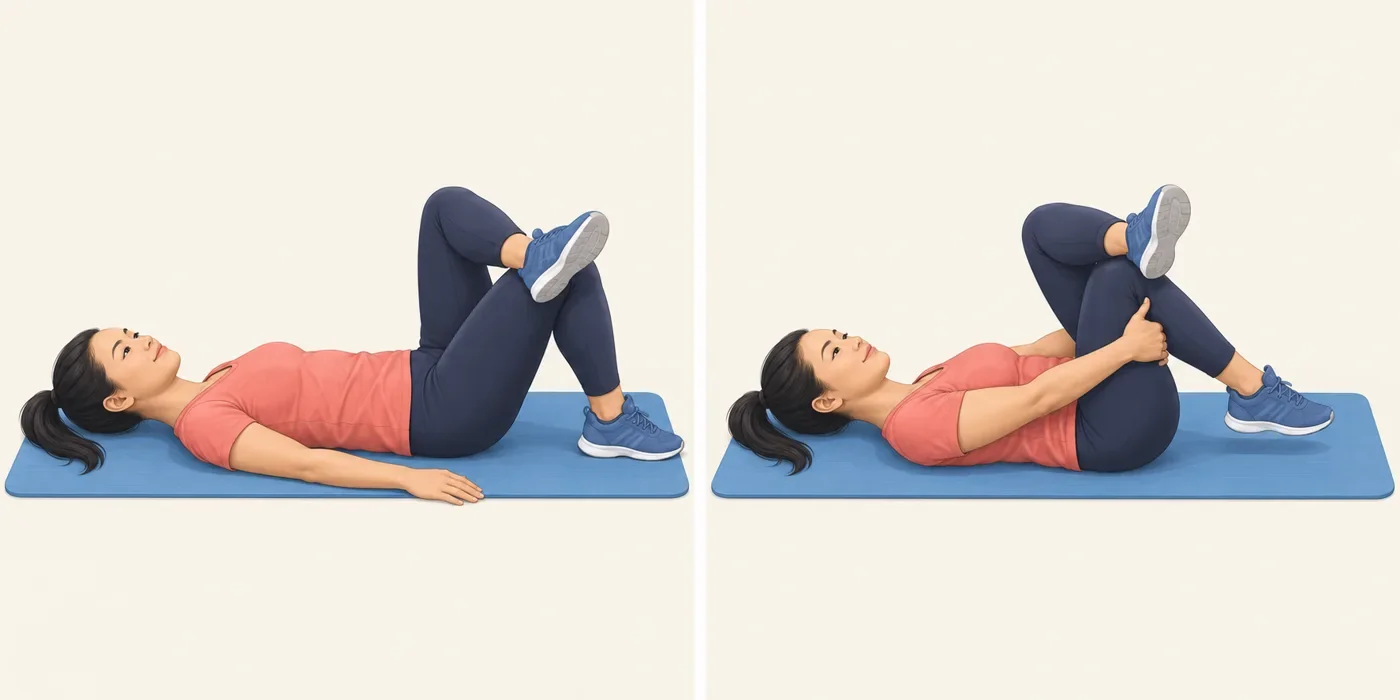
Start → stretch gently Tap image to enlarge ↗
Lying figure-four
- Lie on your back, knees bent. Cross one ankle over the opposite thigh.
- Hold behind the uncrossed thigh and gently bring it towards you.
- Relax, then change sides.
Feel the outer buttock. Do not push the crossed knee down.
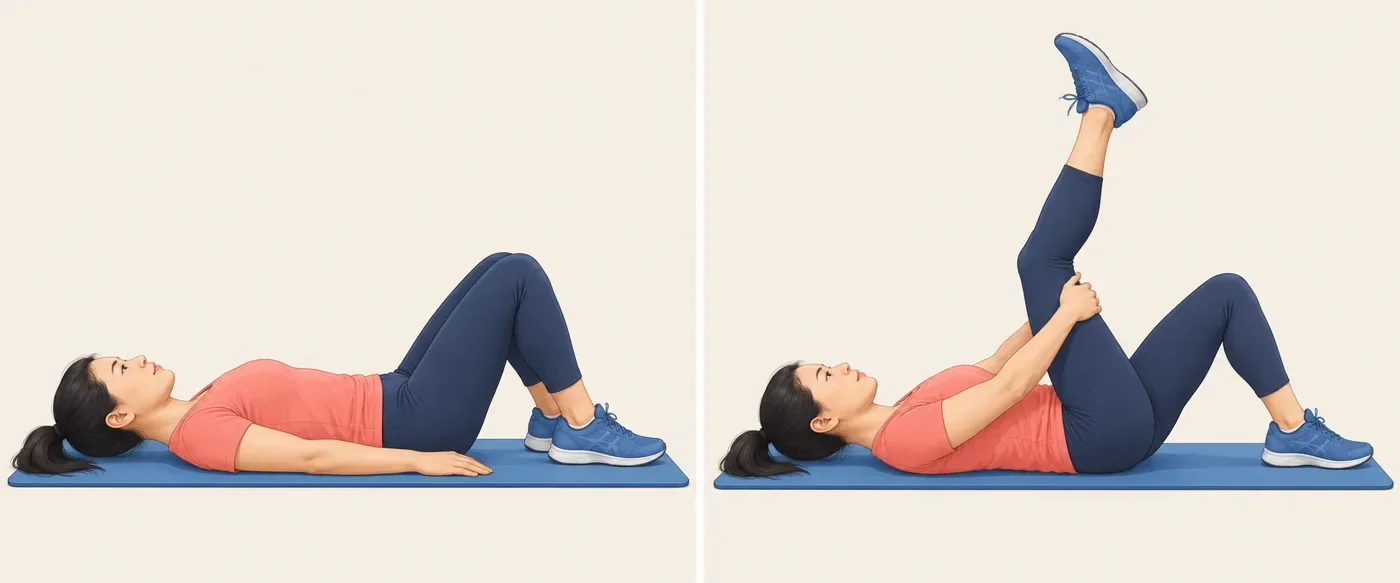
Start → stretch gently Tap image to enlarge ↗
Supported hamstring stretch
- Lie on your back. Keep one foot on the floor, knee bent.
- Lift the other leg and support behind its thigh.
- Ease it towards you with a slight knee bend; switch sides.
Avoid pulling behind the knee or lifting your head.
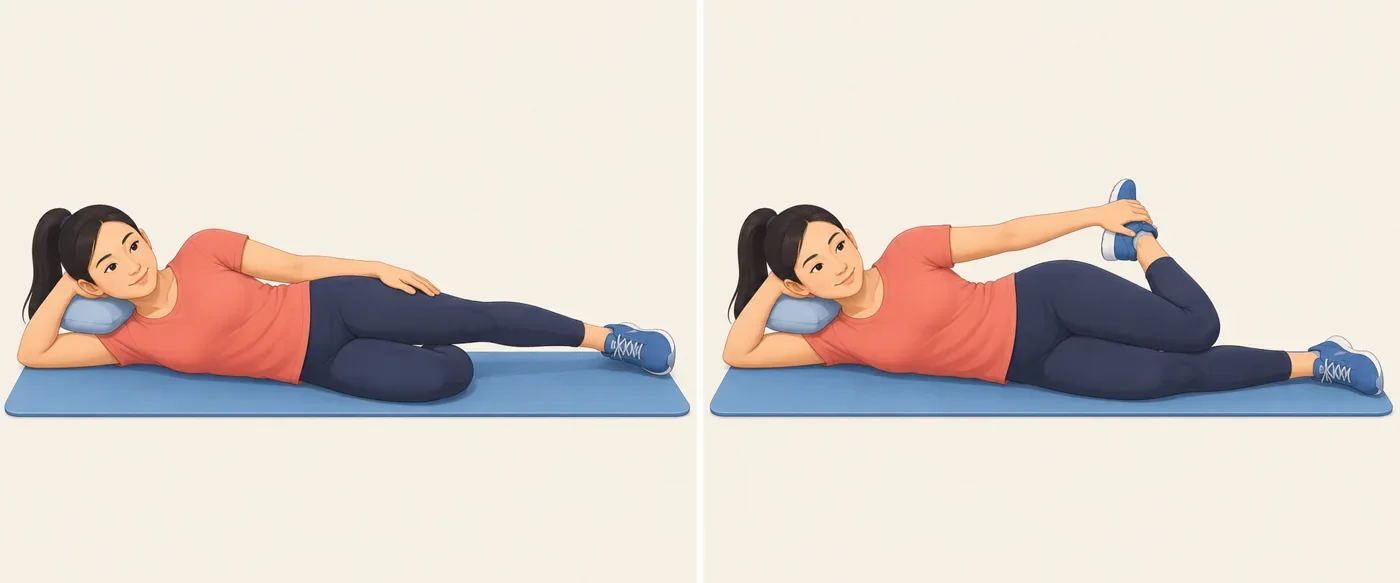
Start → stretch gently Tap image to enlarge ↗
Side-lying quad stretch
- Lie on your side and support your head comfortably.
- Bend the top knee; hold the ankle and gently bring your heel towards your buttock.
- Keep knees together, then switch sides.
Skip this if reaching your ankle strains your knee or back.
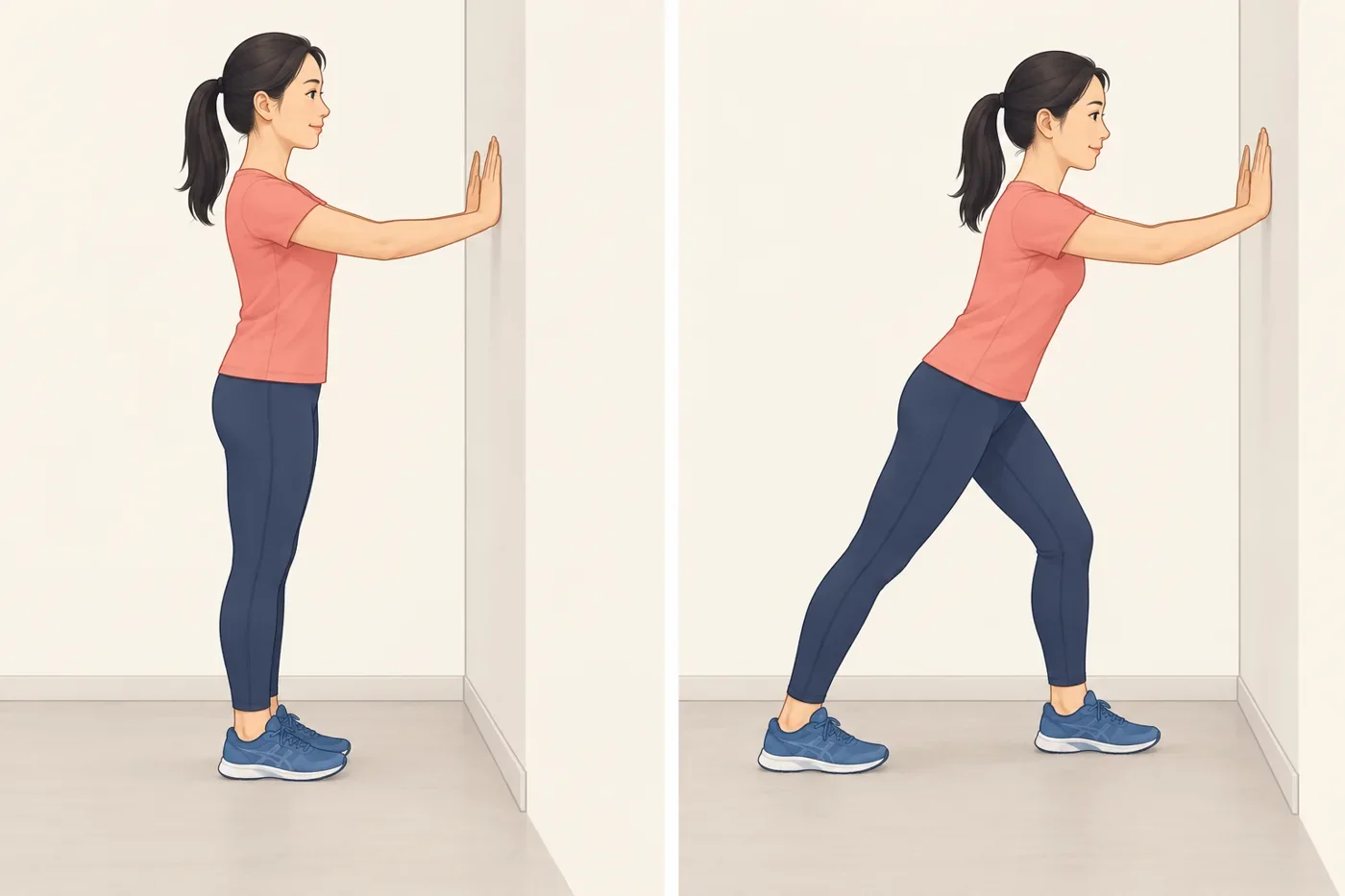
Start → stretch gently Tap image to enlarge ↗
Supported wall stretch
- Place both hands on a wall. Step one foot back.
- Bend the front knee while keeping the back leg straight and heel down.
- Keep toes forwards; release and change sides.
Lean gradually. Do not bounce or let the back heel lift.
Different ways to stretch.
What do static, dynamic and assisted stretching actually mean? These six common terms describe how you move, what provides the support, or the technique being used.

Static stretching
Ease into a comfortable position and hold it without movement. A steady wall calf stretch is one example. Static stretching is commonly used in a regular flexibility routine or after activity, when the muscles are warm.
Dynamic stretching
Move repeatedly through a controlled, comfortable range rather than holding still. Small leg swings or arm circles are examples. Dynamic movements can form part of a gradual warm-up before exercise; begin gently and match them to the activity ahead.
Remember: a controlled swing is different from bouncing into your limit. [1, 2]

Active stretching
Your muscles create and maintain the position, without a partner or strap pulling you into it. For example, lifting a leg and briefly holding it with your arms at your sides uses active effort. Keep the range small enough to stay in control.
Passive & assisted stretching
A strap, gravity, your opposite hand or another person supplies the stretching force. Practitioner-assisted stretching is one form of this. Support can help with positioning, but more force does not mean a better stretch: comfort and communication still matter.
Remember: doing a stretch by yourself does not automatically make it active. [2, 3]

PNF stretching
Short for proprioceptive neuromuscular facilitation. These techniques combine stretching with muscle contractions. In a hold–relax example, you gently press against resistance, relax, then return to a supported stretch. Learn the timing and effort with a qualified professional; do not force a deeper position.
Ballistic stretching
Uses momentum and repeated bouncing near the end of a movement range. It differs from a slow, controlled dynamic stretch. It may appear in specialised sports training, but it is not the starting point for the everyday self-care exercises on this page.
Remember: these illustrations explain the concepts; they are not an invitation to practise bouncing or partner resistance at home. [1, 2, 3]
Other names you may hear
Active isolated stretching uses brief, repeated holds, often with assistance. Isometric means a muscle contracts without visible joint movement, as in the resistance phase of hold–relax PNF. Yoga and Pilates may include stretches, but are broader movement practices. [1, 3]
Where does Oikos fit?
At Oikos, your bodyworker helps you find a comfortable range and adapts the support to you. Assisted stretching describes the guided format, rather than one fixed technique. Our dynamic shaking and joint mobilisation are complementary bodywork methods; they are not interchangeable names for dynamic stretching.
Explore the Oikos method →For everyday practice, start with the gentle guides above. Stretch to mild tension, not pain, and stop for sharp pain, tingling or numbness. Stretching is not a diagnosis or a cure for persistent symptoms; seek advice from a healthcare professional when needed.
Sources & further reading
- American Council on Exercise: Types of Stretching — terminology and technique examples.
- Warneke and colleagues (2025): international expert consensus on stretching — definitions and practical recommendations for healthy populations.
- Page (2012): Current concepts in muscle stretching for exercise and rehabilitation — active, passive and pre-contraction methods.
- Mayo Clinic: Stretching—focus on flexibility — warm-up, comfort and safety guidance.
Educational overview added 12 October 2026. Illustrations are conceptual examples; a comfortable range varies from person to person.
Need a hand with your movement?
If you would like help with positioning, choosing your focus areas or finding a comfortable range, our bodyworkers can guide you through a personalised assisted-stretching session.
First visit · 60 minutes · View session prices · Meet our team